
This week our object of faith is the saints. We will find out more about patron saints, communion of saints, what the catechism says about saints, and in each post include a different litany (list) of saints.
A litany of saints used during the funeral of Blessed John Paul II. Later this week more about the stage of being recognised as a saint.
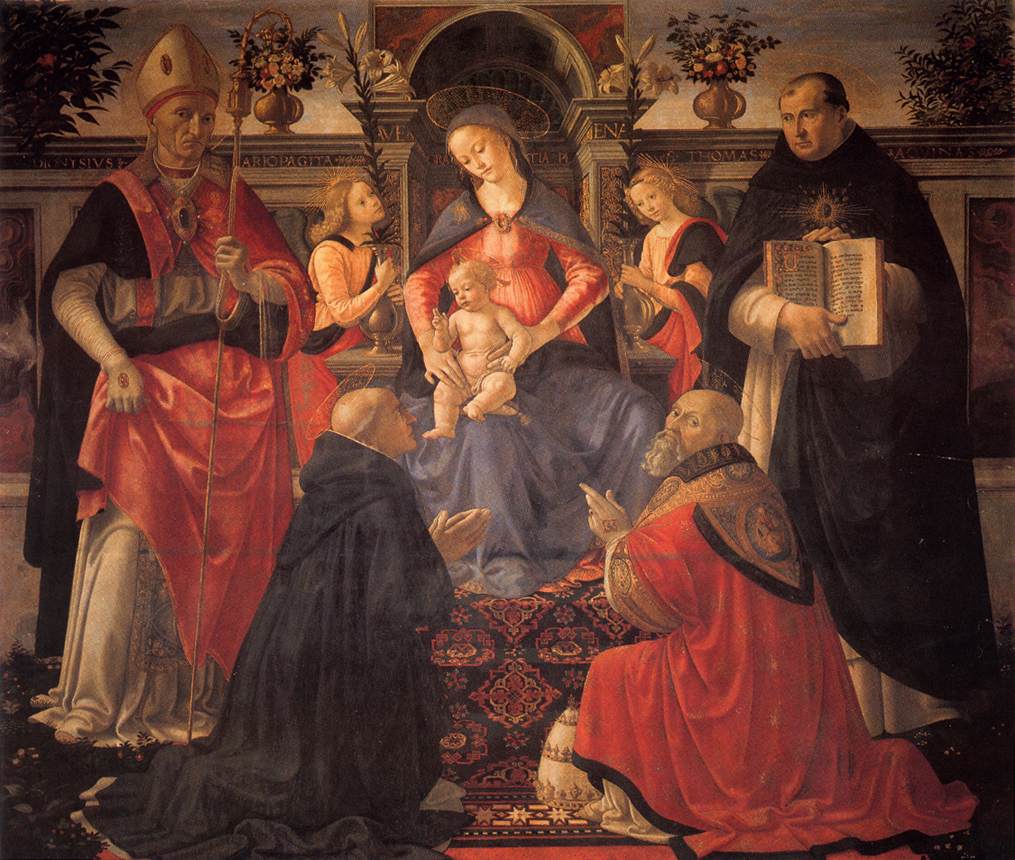 |
| Madonna and Child Enthroned
between Angels and Saints Domenico GHIRLANDAIO, 1486 |
The word 'saint' means 'holy' and it is used in different ways.
Catholics use the word to describe people who have led good lives, following
Jesus' example and teaching, who have died and now live in heaven. Canonised
saints are those people who are recognised throughout the world as saints and
have gone through a process called canonisation which is led by the Church.
Saints are important in our faith because they offer examples and role models
for us to strive to follow. They show how others have overcome struggles in
trying to follow Jesus and live like Jesus. A patron saint is a saint who we
ask to pray for us. We may choose a saint whose life particularly inspires us
and we may ask that saint to pray for us as we try to follow their example. The
'communion of saints' refers to the spiritual union of all members of the
Church alive on earth with those who have gone before us who are now in heaven.
CCC 1195 By keeping the memorials of the saints - first of all the holy Mother of God, then the apostles, the martyrs, and other saints - on fixed days of the liturgical year, the Church on earth shows that she is united with the liturgy of heaven. She gives glory to Christ for having accomplished his salvation in his glorified members; their example encourages her on her way to the FatherLitany of Saints
A litany of saints used during the funeral of Blessed John Paul II. Later this week more about the stage of being recognised as a saint.
